Understanding PTSD and CPTSD in the Workplace
Post-Traumatic Stress Disorder (PTSD) and Complex PTSD (CPTSD) are mental health conditions triggered by traumatic experiences. While PTSD may stem from a single event—such as a violent incident, combat experience, or serious accident—CPTSD often arises from prolonged or repeated trauma, such as abuse or extended exposure to hostile environments.
Both can profoundly affect individuals’ daily functioning, particularly in high-pressure work environments. Symptoms may include:
- Intrusive thoughts or flashbacks
- Avoidance of reminders
- Negative mood or distorted self-perception
- Heightened arousal (e.g., irritability, insomnia, exaggerated startle response)
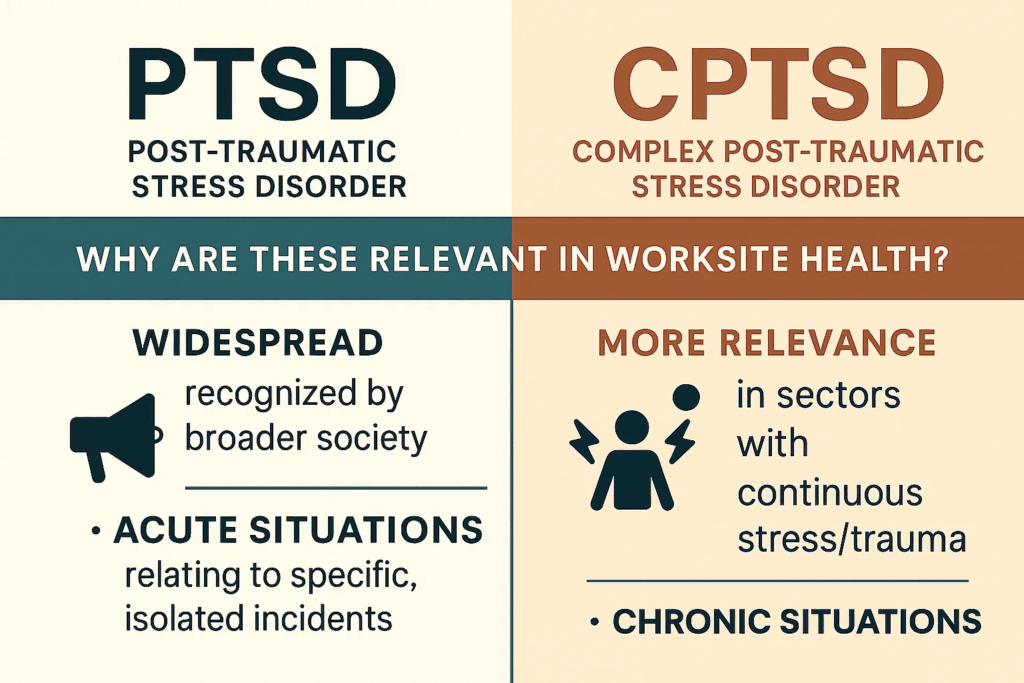
While PTSD is more widely recognized, CPTSD is increasingly relevant in workplace wellness conversations, especially in sectors where chronic exposure to stress and trauma is the norm.
High-Risk Industries and Vulnerable Populations
Some sectors and roles are more prone to trauma exposure:

- Healthcare workers: Experience workplace violence rates 5x higher than average【https://www.bls.gov/iif/factsheets/workplace-violence-healthcare-2018.htm】
- First responders and security professionals
- Educators, especially in crisis-prone areas
- Veterans transitioning to civilian employment who may benefit from accommodations like flexible schedules, quiet workspaces, or reduced caseloads during transitions
- Survivors of workplace violence, harassment, or abuse
Understanding the occupational context is crucial to establishing effective support structures.
Recognizing Symptoms at Work
PTSD and CPTSD don’t always look like distress—they can manifest as detachment, perfectionism, reactivity, or even overwork. Watch for:
- Withdrawal or disconnection
- Sudden emotional outbursts
- Missed deadlines or concentration issues
- Discomfort in group settings or meetings
Support begins with awareness, not assumptions or diagnoses.
The Case for Trauma-Informed Workplaces
Ignoring trauma in the workplace is not just a mental health issue—it’s a business risk. Employees struggling with PTSD or CPTSD may experience:
- Decreased productivity
- Interpersonal challenges
- Increased sick leave or attrition
- Higher risk of burnout and workplace incidents
Creating a trauma-informed workplace can enhance employee retention, morale, and overall safety.
Unaddressed trauma is a security risk for individuals and organizations alike.
Actionable Strategies for Employers
- Foster a Culture of Psychological Safety:
a. Promote mental health awareness without stigma
b. Use inclusive language and lead with empathy
c. Normalize seeking support before a crisis point - Train Leadership and Security Personnel
a. Ensure supervisors understand how trauma may present at work
b. Provide training on de-escalation techniques and trauma-informed communication
c. Incorporate these practices into your security and HR protocols - Provide Accessible Mental Health Resources
a. Clearly communicate and promote Employee Assistance Programs (EAPs)
b. Partner with trauma-informed therapy providers or counseling services for referrals
c. Offer paid mental health days and flexible scheduling to support treatment or recovery
d. Remove access barriers by centralizing information in onboarding materials and internal communications - Design Supportive Environments
a. Create quiet rooms or low-stimulation spaces for decompression
b. Consider sensory sensitivity in physical layouts (e.g., lighting, sound, workspace density)
c. Ensure teams have access to transparent schedules and consistent communication - Handle Disclosures Appropriately
a. Never pressure anyone to disclose trauma, but when they do, respond with care
b. Uphold confidentiality and provide clear, judgment-free pathways to accommodations
c. Train HR and managers to respond without retraumatizing or dismissing the individual
Resources:
- National Center for PTSD (VA)
- Substance Abuse and Mental Health Services Administration (SAMHSA) Trauma and Violence https://www.samhsa.gov/find-help/helplines/national-helpline
- NAMI – PTSD https://www.nami.org/about-mental-illness/mental-health-conditions/posttraumatic-stress-disorder/
The Role of Protective Intelligence and Security Teams
For organizations in high-risk sectors, security and intelligence teams must be trained to recognize trauma responses and work in a trauma-informed manner.
At The North Group, our protective teams and embedded GSOC staff are increasingly trained in behavioral threat assessment models that incorporate principles of psychological safety. Trauma-aware protocols can de-escalate potential threats and reduce harm, both to the individual and those around them.
Closing Thoughts: Security Is Holistic
Supporting employees with PTSD and CPTSD is not just the job of HR—it’s a collective responsibility. When we make room for healing and safety, we build stronger, more resilient organizations. A trauma-informed approach to workplace culture isn’t just compassionate—it’s strategic.
If your team needs support building a trauma-informed security protocol or workplace policy, contact The North Group today.