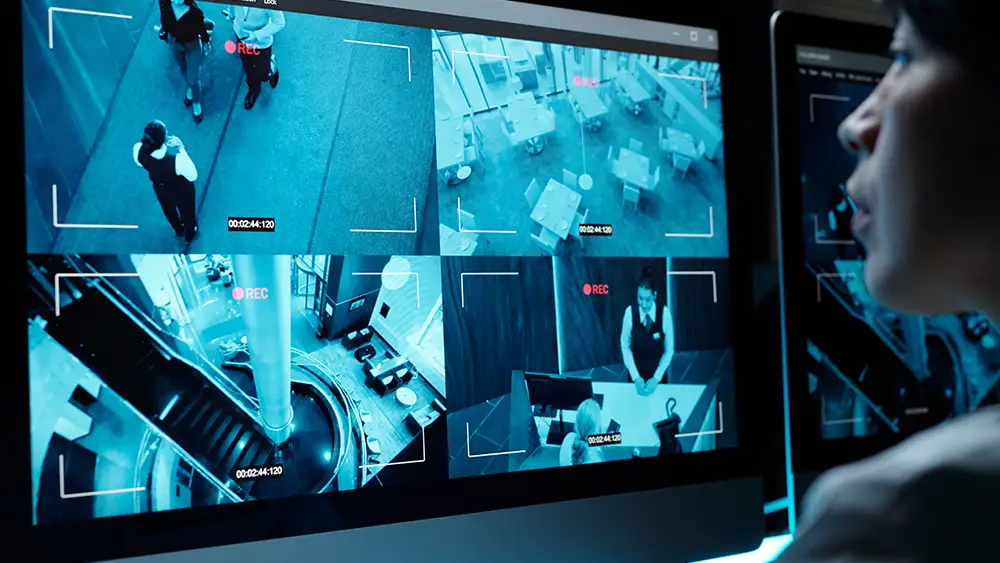
A Global Security Operations Center (GSOC) is more than a room filled with monitors.
At its best, a GSOC gives an organization something far more valuable: visibility.
It provides a centralized view of the people, places, systems, events, and emerging threats that matter to an organization. It watches for physical and digital indicators, connects information that might otherwise remain isolated, and helps decision-makers recognize potential problems before they become larger ones.
That distinction matters because today’s adversaries don’t think in organizational silos.
Criminals, hackers, insiders, activists, and state-backed actors look for opportunities. They identify the people, systems, facilities, and information that can provide the greatest advantage. Sometimes the objective is financial. Sometimes it is disruption, influence, access, intelligence, or reputational damage.
Their path into an organization may be physical, digital, or a combination of both.
A modern GSOC has to see the organization the same way.

Start With What an Adversary Values
One of the most important questions in security is also one of the simplest:
If someone wanted to harm, exploit, disrupt, or gain access to this organization, what would they target?
The answer isn’t always a building.
It could be a person with privileged access. An executive traveling overseas. A system administrator with credentials to critical infrastructure. A board member carrying sensitive information. A hospital whose operations cannot tolerate prolonged disruption. A data center supporting essential business functions.
Understanding what an adversary values helps determine what an organization should be watching.
And two categories consistently deserve attention: people with influence or privileged access and the critical facilities and services an organization depends on.
1. People With Power or Special Access
Executives and other high-value personnel are attractive targets because compromising one person can create consequences across an entire organization.
A CEO or senior executive may be targeted for ransom, intimidation, influence, intelligence gathering, or public impact. Their travel patterns, family information, home address, public appearances, and online presence can all create exposure.
But organizational importance isn’t defined by title alone.
An IT administrator may never appear in the news, yet possess credentials capable of opening access to critical systems. Security personnel may understand physical vulnerabilities, alarm procedures, camera coverage, or access protocols. Board members may possess information about acquisitions, financial performance, strategic direction, leadership changes, or other sensitive decisions.
For an adversary, the question isn’t necessarily, “Who is the most senior person?”
It is: Who can give me what I want?
That makes protecting people an intelligence problem as much as a physical-security problem.
How a GSOC Helps Protect Them
Executive protection can provide physical security and safe movement for principals during travel, public appearances, meetings, and other periods of elevated exposure.
But the protective environment surrounding that individual should extend beyond the agent standing beside them.
A GSOC can monitor publicly available information for threats, concerning behavior, unwanted attention, or indications that someone is attempting to identify a person’s location or movements. It can maintain awareness of events occurring around travel destinations, residences, offices, and venues.
When appropriate, those observations can be connected with information from physical security, cybersecurity, access control, human resources, executive protection teams, and other internal stakeholders.
That creates context.
A threatening social media post may mean one thing on its own. An attempted entry into a facility may mean something else. Repeated online attention toward an executive, combined with an access-control event and a known workplace grievance, creates a very different picture.
No individual system may recognize that pattern.
A GSOC can help connect it.
Organizations also need strong controls around privileged access. Multi-factor authentication, appropriate access permissions, monitoring, and clear escalation procedures make it more difficult for legitimate credentials to become an invisible vulnerability.
The objective is not simply to protect a person.
It is to understand the network of exposure surrounding that person and recognize when something within that environment begins to change.
2. Critical Buildings and Services
Attackers also look for assets whose disruption creates disproportionate consequences.
Hospitals, utilities, data centers, manufacturing facilities, transportation infrastructure, corporate campuses, and other critical environments are attractive precisely because people depend on them.

Disrupting these facilities can create operational downtime, financial loss, public fear, safety concerns, reputational damage, or cascading effects far beyond the original target.
For a hospital, disruption can affect patient care.
For a utility, it can affect an entire community.
For a data center, an incident may interrupt business operations across multiple organizations or locations.
Protecting these environments requires more than watching a camera feed.
A modern GSOC can bring cameras, access-control systems, alarms, sensors, cybersecurity information, threat intelligence, and operational reporting into a broader common operating picture.
That matters because a physical event and a digital event may not be unrelated.
Imagine an organization detects unusual login attempts against a critical system at approximately the same time someone attempts unauthorized physical access to a restricted area.
Viewed separately, one event may be assigned to cybersecurity and the other to physical security.
Viewed together, they may indicate coordinated activity.
That is where integration becomes powerful.
The GSOC isn’t valuable simply because it receives more alerts.
It is valuable because it can help determine which alerts belong together.
Attackers Don’t Separate Physical and Cyber Risk
Organizations often do.
Physical security may report through one leader. Cybersecurity reports through another. Executive protection, HR, legal, operations, facilities, and communications may all maintain separate information and processes.
There are legitimate reasons for those structures.
The risk appears when the information remains there.
An adversary does not care which department owns an alarm, an employee report, an attempted login, or a suspicious vehicle outside a facility. They care whether those vulnerabilities can be used.
Security operations have to become equally unconcerned with organizational boundaries.
Physical security and cybersecurity do not need to become the same discipline. But they do need mechanisms for sharing relevant information, identifying overlapping threats, and coordinating response when an incident crosses both environments.
The GSOC can become the connective layer that makes that possible.
What Should a Modern GSOC Focus On?
Technology matters, but simply adding more technology does not automatically create better security.
A mature GSOC should focus on several core capabilities.
24/7 Monitoring and Intelligent Alerting
More alerts do not necessarily create more awareness.
When personnel are overwhelmed by false positives and low-value notifications, genuinely important information becomes easier to miss. Effective GSOC operations prioritize information so analysts can focus their attention where it matters most.
Correlation of Events
An access-control alert, cybersecurity notification, employee report, social media post, and camera event may appear insignificant independently.
The ability to correlate activity across systems creates the possibility of seeing the larger pattern.
This is where information begins becoming intelligence.
Geopolitical and Environmental Awareness
An organization’s threat environment does not stop at its property line.
Political instability, international conflict, activism, civil unrest, crime trends, severe weather, transportation disruptions, and other external events can rapidly change the risk surrounding personnel and operations.
For organizations operating across multiple regions or countries, that awareness becomes even more important.
Threat Intelligence
A GSOC should understand more than what is happening.
It should work to understand who may be responsible, how they operate, what they are targeting, and what they are trying to achieve.
Those insights allow organizations to move from reacting to individual events toward anticipating likely behaviors.
Clear Escalation and Decision-Making
Intelligence has limited value if no one knows what to do with it.
A GSOC needs defined thresholds for escalation, clear communication channels, and an understanding of who has the authority to make decisions when a potential threat develops.
The goal is to get the right information to the right person while there is still time to use it.

Make the Organization a Harder Target
Ultimately, the purpose of a GSOC is not to create the appearance of security.
It is to create advantage.
Every adversary makes decisions based on some version of risk and reward.
- How difficult is the target to access?
- How likely am I to be detected?
- How quickly will someone respond?
- How much effort will this require?
- What is the potential payoff?
The stronger an organization’s visibility, intelligence, controls, and response capabilities become, the less attractive the opportunity can become.
That is deterrence built through capability.
A GSOC contributes to that advantage by helping an organization see across its environment instead of through isolated systems and departments.
It connects physical events with digital ones.
It connects external threats with internal vulnerabilities.
It connects information with context.
And, most importantly, it connects intelligence with people who can act on it.
The strongest organizations don’t wait for every piece of a threat to become obvious before paying attention.
They build the capability to recognize the pattern while there is still time to change the outcome.
That is what a modern GSOC should deliver: the ability to see more, understand sooner, and act before risk becomes consequence.